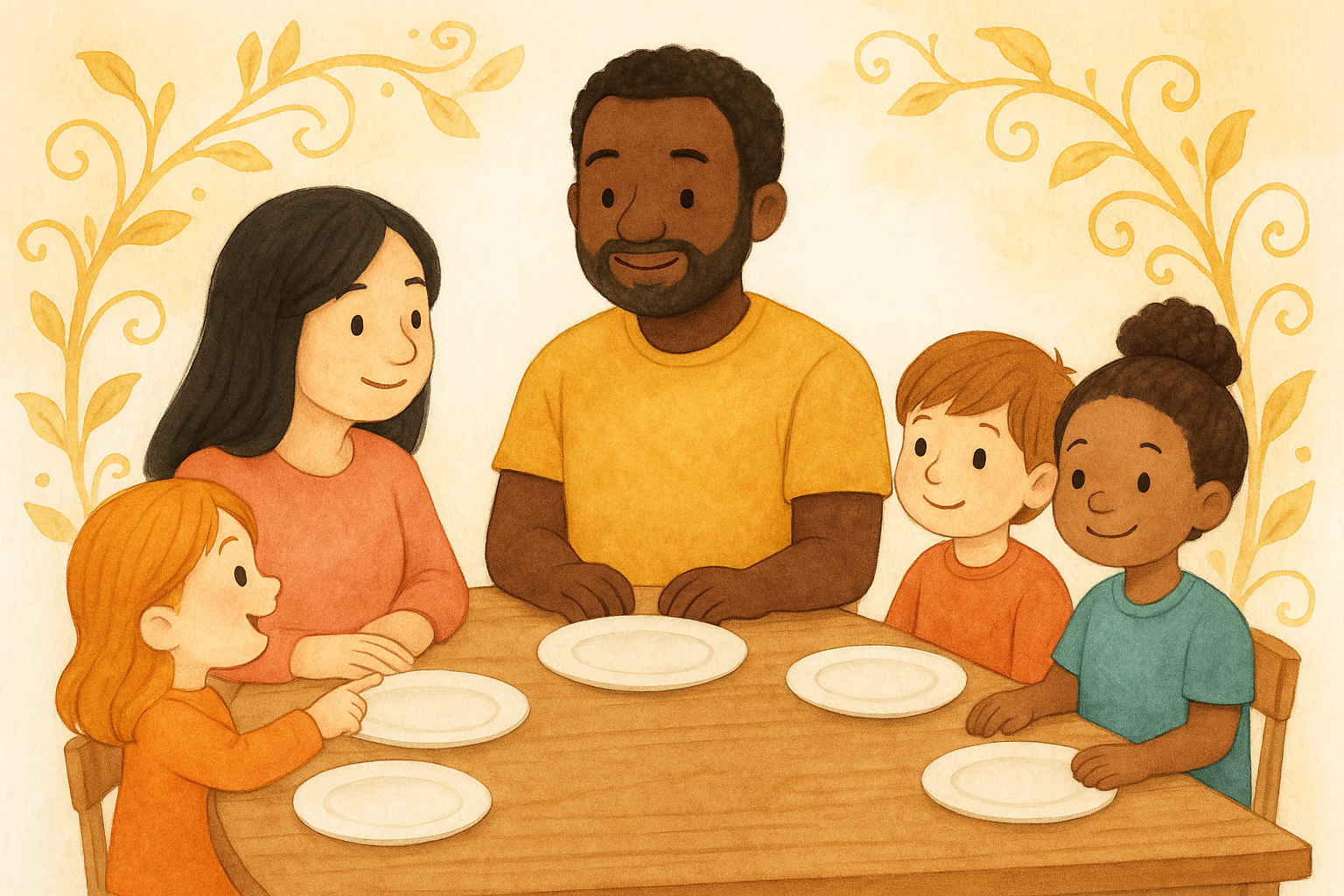
A simple, science-backed ritual to end dinner power struggles, strengthen kids’ self-regulation, and close the meal with thanks.
The problem → the reset
If dinner at your place sometimes slides into “one more bite,” mismatched portions, or a tug-of-war over what’s on the plate, tonight is a reset. The problem is power struggles and plates kids didn’t choose. The reset is a family-style table paired with a short gratitude loop that keeps kids in charge of how much they eat—and gives the whole room a calmer rhythm.
This isn’t a complicated program or a reward chart. It’s a small, repeatable flow you can use any night of the week: open with one line of gratitude, serve the meal family-style so everyone plates their own food, pause mid-meal to check hunger vs. comfort, and close with thanks to the cook/provider plus one tiny appreciation from each person.
Why this works (in plain English)
- Kids learn to listen to their bodies. When caregivers decide what/when/where and children decide whether/how much, kids practice hunger–fullness cues and regulate intake more effectively. This “responsive feeding” approach is supported across pediatric guidance and research (Head Start: Parent Provides, Child Decides; Liu et al., 2023).
- Family-style service builds autonomy and a positive table climate. Shared dishes with simple choices let children practice serving, motor skills, and polite turns, while reducing pressure. It’s recommended in child-nutrition programs precisely for those developmental benefits (USDA Team Nutrition, 2024).
- Regular family meals correlate with better outcomes. Multiple reviews find that families who eat together more often report healthier dietary patterns and lower risk for disordered eating, among other benefits (Hammons & Fiese, Pediatrics, 2011).
- Gratitude lifts the emotional tone. Short gratitude practices are linked with improved mood and mental health in randomized trials; they set a cooperative tone without getting preachy (Diniz et al., 2023 meta-analysis).
The Family-Style Gratitude Dinner (step-by-step)
-
Open with one line of thanks. Before anyone serves, invite the youngest to choose who offers tonight’s thank-you. Keep it universal and brief:
“Thank you for this food, and for every hand and moment that brought it here. May it nourish us.”
Take two slow, easy breaths together. Then eat.
-
Serve family-style with a few simple options. Place dishes in the middle. Two vegetables, a protein, and a carb is plenty. Everyone builds their own plate. Use two cues only: start small—you can always add, and listen for hungry vs. comfortable.
-
Mid-meal pause. About halfway through, pause for five seconds: Are we still hungry, or does the tank feel full? If hungry, keep eating. If the plate is empty and hunger remains, add a little more. If the tank feels full, pause. Tonight the goal is self-regulation, not clean plates.
-
Model without speeches. Adults quietly model a balanced plate. If there’s something new, take a tiny micro-taste—no commentary, just curiosity. Kids notice what we do.
-
Close the gratitude loop. Before clearing the table, thank the cook and the provider. Then each person offers one small appreciation from today—a moment, a person, a little win. You’ve bookended the meal with gratitude.
Troubleshooting & gentle guardrails
- “My child only wants one item.” That’s okay. Keep offering the same few items consistently; appetite and preference shift with time and exposure. The job is to provide structure and choices—not to pressure.
- “They stop after three bites.” Trust the check-in. If they’re comfortable, allow the pause. Appetite varies by day, growth phase, and activity load. A planned evening snack can provide another opportunity later.
- “What if they overfill the plate?” Remind them they can always come back for more. Family-style works best when the default is small first serves and easy second helpings.
- “Do I label foods as ‘good’ or ‘bad’?” Avoid moral language. Keep the tone neutral: foods have different jobs—some fill us up, some give quick energy, some help us grow.
- “Do I have to include dessert?” Your house, your call. If dessert is offered, consider small, consistent portions served with the meal sometimes to reduce bargaining power; keep the same calm tone either way.
- “We need to eat fast tonight.” Keep the ritual, just shorter: a one-line thanks, two breaths, a quick check-in, and a two-sentence gratitude close. Consistency beats perfection.
Make it yours (small tweaks that help)
- Use consistent language. “Start small—you can always add.” “Hungry or comfortable?” “No pressure, no bargaining.”
- Keep options modest. Two to four dishes reduce decision fatigue for kids and cleanup for you.
- Rotate a “helper.” Let a child place serving spoons, fold napkins, or announce who will give the thank-you.
- Anchor the time. If evenings are busy, set a rough window for family meals a few nights a week. Frequency matters more than length.
- Hold the tone. Curiosity beats commentary. A neutral, warm tone invites kids to try more on their own timeline.
Research & Links
Core sources (3):
- Head Start. “Parent Provides, Child Decides.” Plain-language summary of the responsive-feeding roles (caregiver decides what/when/where; child decides whether/how much).
- Hammons, A.J., & Fiese, B.H. (2011). Pediatrics. Systematic review linking more frequent family meals with healthier dietary patterns and reduced risk of disordered eating.
- Diniz, G. et al. (2023). Systematic review & meta-analysis of gratitude interventions. Gratitude practices improve mental health and reduce anxiety/depression symptoms.