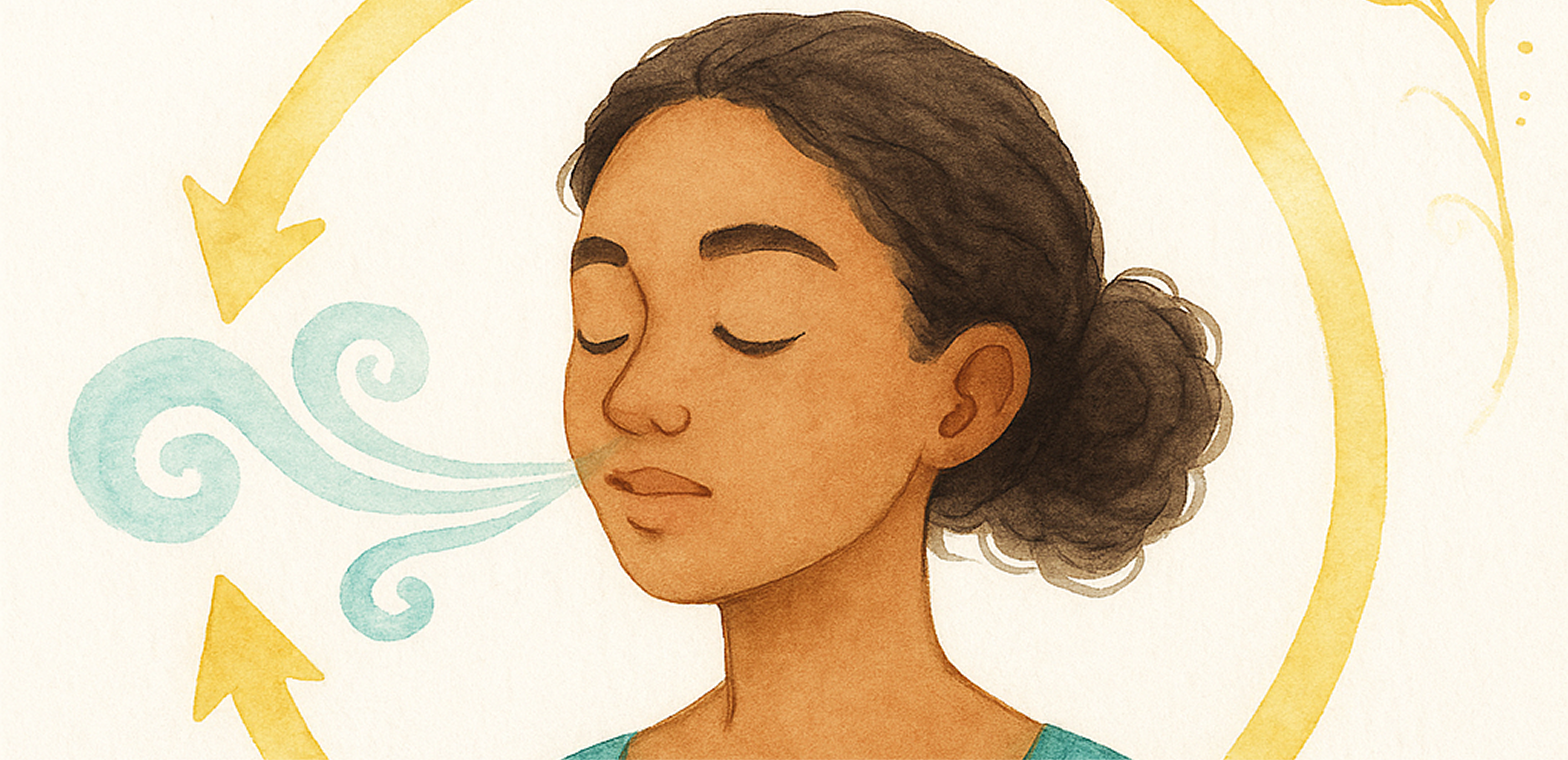
Day 13 of #30daysofgratitude 🕊️ Breath Meets Gratitude Practice
Your breath is always with you — a built-in tool for instant calm. When you combine breathing techniques with gratitude, something remarkable happens: you engage both your body’s relaxation response and brain pathways tied to well-being.
The Science of Cyclic Sighing
Stanford Medicine researchers found that an exhale-focused pattern called cyclic sighing was the most effective brief practice for improving mood and reducing anxiety compared with other breathing exercises and with mindfulness meditation. In a 2023 randomized study (Cell Reports Medicine), participants who did five minutes of daily cyclic sighing showed greater mood improvements and larger reductions in respiratory rate than comparison groups.
The technique is simple: inhale through your nose, take a second shorter inhale to fully expand your lungs, then make a long, slow exhale through your mouth. The double inhale helps reinflate alveoli (tiny air sacs), and the extended exhale shifts physiology toward calm — mechanisms consistent with how slow, controlled breathing supports parasympathetic activity.
Adding Gratitude Amplifies the Benefits
Gratitude practice adds a complementary, brain-based nudge. Neuroimaging work shows gratitude meditations can alter functional connectivity in emotion-regulation networks and are accompanied by lower heart rate during practice (Kyeong et al., 2017, Scientific Reports). More broadly, a meta-analysis of 64 randomized trials found that gratitude interventions improve mental health and reduce symptoms of anxiety and depression (Diniz et al., 2023).
How to Practice Gratitude Breath
- Inhale through your nose — a normal breath in.
- Take a second, shorter inhale — a small sip of air to fill your lungs completely.
- Exhale slowly through your mouth — let it be long and complete.
- On each exhale, silently whisper: “Thank you for this breath.”
- Repeat 5–10 times.
You can practice this anywhere: before a stressful meeting, in traffic, before bed, or whenever tension builds. Reviews of brief respiratory interventions report meaningful reductions in anxiety, often within a single session (Chin et al., 2024, Frontiers in Psychology).
Why It Works
The double inhale re-inflates collapsed alveoli, improving gas exchange; the long exhale promotes parasympathetic (vagal) tone that calms the body. Layering gratitude shifts attention from threat monitoring to appreciation, engaging prefrontal systems linked to emotion regulation. Evidence across trials suggests breathwork reduces stress and supports mental health (Fincham et al., 2023, Scientific Reports), while gratitude interventions improve mood and anxiety symptoms (Diniz et al., 2023).
Today's Task 🌿
Practice five cyclic sighs right now. With each exhale, silently say “thank you for this breath.” Notice what shifts — maybe your shoulders drop, your jaw unclenches, or your thoughts slow down.
Your breath is a key you always carry. Use it.