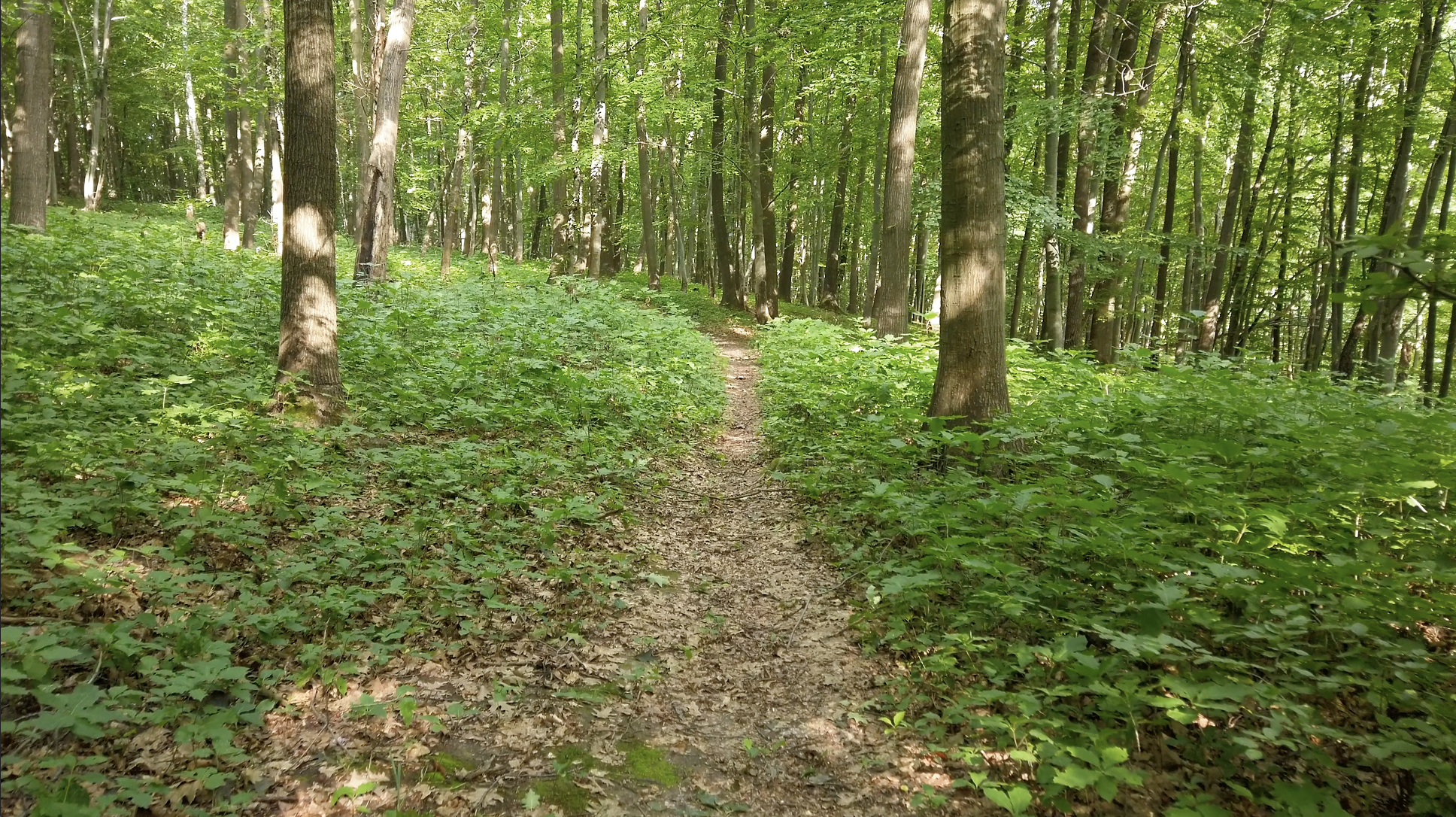
Day 6: Gratitude Nature Walk
The simplest medicine for a crowded mind might be a short walk under an open sky. No headphones, no hurry — just a few minutes of you and the world that quietly holds you up. Today’s invitation is to merge gratitude with movement, to let nature remind you what “enough” feels like.
The Healing Power of Nature — and Why Gratitude Multiplies It
Psychologists have long known that time spent outdoors restores mental energy. Researchers at Harvard T.H. Chan School of Public Health report that contact with green spaces is linked to lower stress hormones, improved mood, and even decreased risk of depression and anxiety disorders. A systematic review on green-space exposure found that higher levels of green space were significantly associated with lower risks of depression and anxiety (“Green spaces exposure and the risk of common psychiatric disorders”).
When you add gratitude to the mix, something subtle but powerful happens. You stop walking through nature and start walking with it. Instead of glancing past the trees, you notice how they’re breathing alongside you. That small shift — from seeing to appreciating — is what turns a stroll into a grounding practice.
How to Take a Gratitude Nature Walk
Step outside without an agenda. If possible, silence your phone or put it in your pocket. As you begin walking, let curiosity lead. Notice textures, colors, and sounds — the hum of insects, the layered greens of leaves, the way light slides down a wall. When something catches your attention, pause for half a breath and think, “Thank you for letting me see this.”
Try to find at least three moments that spark appreciation. It might be the warmth of the sun after a cold week, the scent of wet earth, or a child’s laughter bouncing down the path. Some people like to whisper their thanks; others simply smile. Either way, gratitude turns ordinary scenery into a dialogue between you and the living world.
Anecdote — A Five-Minute Reset
A few months ago, I was having one of those days where everything felt off—deadlines, traffic, the works. To clear my mind, I figured the best thing for me was to just go for a ten-minute walk. Half a block in, I noticed a sparrow trying to balance on a branch far too thin for it. It kept wobbling, wings fluttering wildly, until it steadied itself. For some reason that tiny struggle mirrored my own, and I caught myself smiling. By the time I returned to the office ten minutes later, nothing external had changed, but the noise inside my head had softened. That’s the quiet gift of pairing nature with thankfulness: you return to the same life, just lighter.
Why It Matters
Studies suggest that gratitude and natural-environment exposure activate overlapping neural networks related to reward and social connection. (“Neural Correlates of Gratitude”). And large reviews show green-space exposure is linked to lower incidence of psychiatric disorders (see above). In other words, every moment of appreciation literally strengthens your brain’s wiring for calm and connection. You don’t need a mountain trail — even noticing a leaf drifting in light can trigger that restorative effect.
Today’s Task
Take a 5- to 10-minute walk outside today (longer if it calls you). Consciously thank at least three natural things around you — a cool breeze, a patch of sky, the sound of rain, or that stubborn little dandelion in the sidewalk crack. If you live in the city, a potted plant on a balcony or the rhythm of clouds still count. When you’re done, jot a note or post a photo with one sentence about what you noticed. Gratitude shared grows stronger — and it might just remind someone else to look up. 🌍🍃
Sources & Further Reading
- Harvard T.H. Chan School of Public Health — Time in nature boosts physical & mental well-being. Full article
- “Green spaces exposure and the risk of common psychiatric disorders.” PMC open-access — meta-analysis linking green space exposure to lower risk of depression, anxiety, dementia, schizophrenia & ADHD.
- Fox et al., 2015 — Neural Correlates of Gratitude. Frontiers open access