Day 9: Gratitude for Strangers
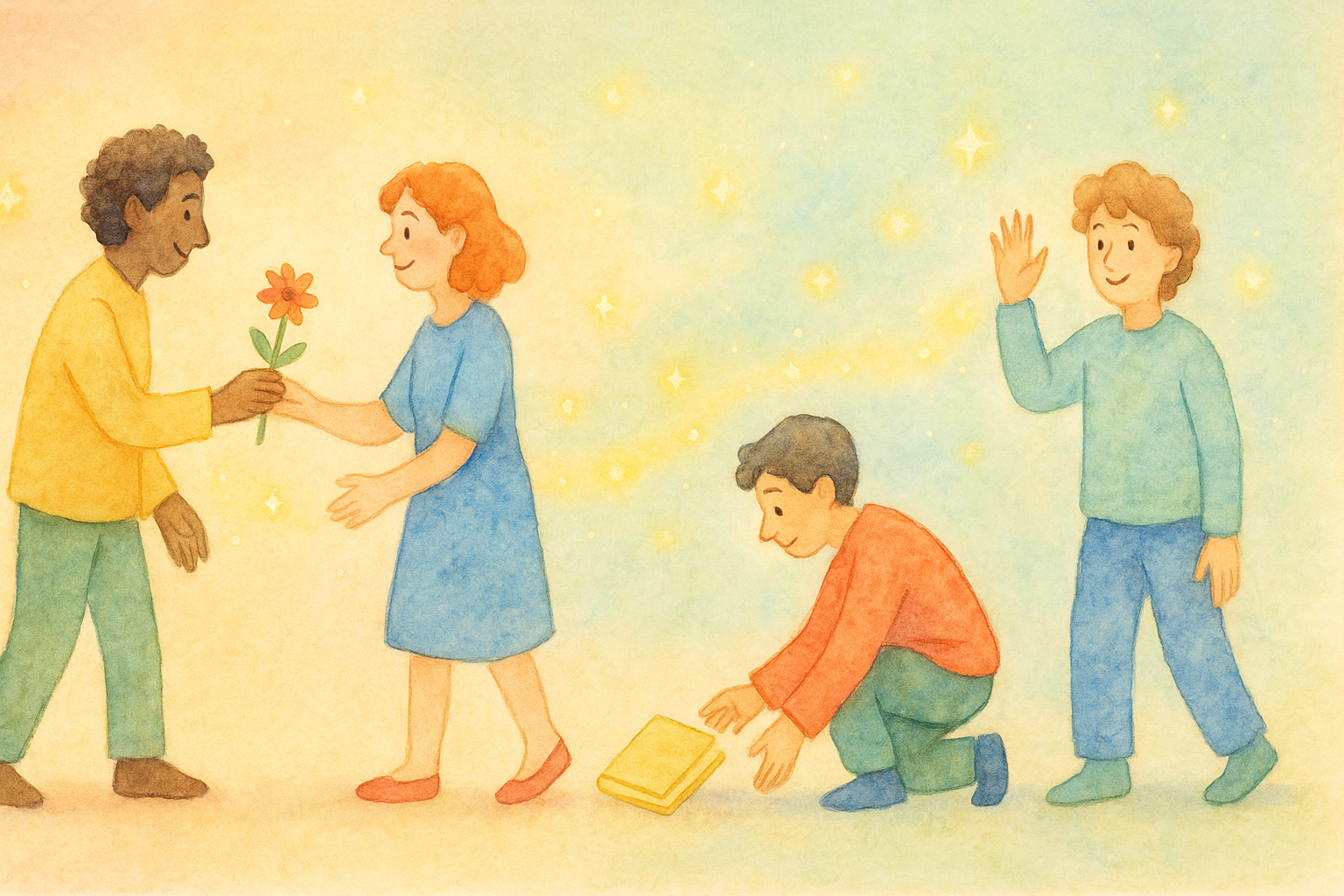
It isn’t always the big moments that change the feel of a day. Sometimes it’s a smile from the bus driver, a barista who remembers your order, or someone who lets you merge in traffic. Today’s practice turns our attention to those small kindnesses between people who may never learn each other’s names — and why noticing them matters.
The Surprising Lift of “Weak Ties”
Psychologists call casual, everyday contacts with acquaintances and strangers weak ties. A University of British Columbia study found that people who had more of these brief, positive interactions — chatting with a barista, a shop clerk, a neighbor on the sidewalk — reported greater happiness and a stronger sense of belonging the same day (Sandstrom & Dunn, 2014). In other words, the tiny hellos add up.
We Undervalue Small Acts (But They Land Big)
UBC researchers also highlight a blind spot many of us share: we routinely underestimate how meaningful small acts of kindness feel to the person receiving them. A quick note of thanks, holding a door, or offering directions can brighten a stranger’s mood far more than we expect (UBC News, 2025). What seems ordinary to us can be the best moment in someone else’s morning.
Why Connection Feels So Good
The social brain is built to respond to warmth and safety. UC Berkeley’s Greater Good Science Center summarizes how supportive interactions can engage systems linked with bonding (like oxytocin release) and help steady stress responses. Even modest, friendly exchanges nudge physiology toward calm and connection (Greater Good, UC Berkeley).
How to Practice Gratitude for Strangers
- Notice the micro-moments. A nod from a cyclist, a wave from a driver, someone holding an elevator. Mark it with a silent “thank you.”
- Create one yourself. Offer the parking spot, hold the door, compliment genuine effort. Keep it simple and sincere.
- Reflect for 30 seconds tonight. Jot down three small gestures you noticed (or offered) today. Name how each one made you feel.
Practiced daily, this simple lens-change reveals how much quiet generosity is already circulating. Gratitude doesn’t just recognize it — it helps keep it moving.
Today’s Task 🌼
Catch three kindnesses from strangers, and make one kindness of your own. If it feels right, return a smile. Those tiny signals ripple further than we think.
Sources & Further Reading
- Sandstrom, G. M., & Dunn, E. W. (2014). Social Interactions and Well-Being: The Surprising Power of Weak Ties. Personality and Social Psychology Bulletin, 40(7), 910–922. https://pubmed.ncbi.nlm.nih.gov/24769739/
- University of British Columbia News (2025). Benefits of small acts of kindness. https://news.ubc.ca/2025/09/11/benefits-of-small-acts-of-kindness/
- Greater Good Science Center, UC Berkeley. How Relationships Feed Your Brain. https://greatergood.berkeley.edu/article/item/how_relationships_feed_your_brain