🌿Gratitude Activities for Kids: 8 Gentle Ways to Begin
June 16, 2026
Some of the best gratitude activities for kids are so small you could almost miss them — a thank-you whispered at bedtime, a leaf taped to the fridge, a quiet noticing of the sunrise through the window. Little moments, repeated, become something sturdy.
In Thank You Gate by AJ Ellis, every thank-you becomes a new vine growing across your own gate: a gentle boundary that lets peace in and keeps the noise out. Children love that picture because they can see it. The activities below are different ways to grow those vines — by hand, out loud, and together.
Start with a gratitude jar
A gratitude jar is the easiest first vine. You need an empty jar, a stack of paper scraps, and a pencil. Once a day, your child names one good thing and drops it in.
For younger children who can’t write yet, let them draw it — a dog, a cookie, a friend’s face. For ages 6 and up, try a sentence starter so the jar doesn’t fill with the same three answers: “Today I’m thankful for someone who helped me when…” or “A small thing that made me smile was…”
Then, once a month, tip the jar onto the table and read them together. Watching the pile grow is its own quiet reward. The jar makes gratitude visible, which is exactly what young minds need.
Draw the gate, grow the vines
Give your child a big sheet of paper and have them draw a simple gate or archway in the middle. This is their gate. Every time they say a real thank-you during the week, they add a vine, a leaf, or a small flower curling up around it.
By Friday, the gate is greener. The drawing turns an idea into something they can hold and add to. Tape it where they’ll see it — the back of a bedroom door works well. Grunckle, the kind little gatekeeper from the book, would approve of a gate that grows a bit messier and lovelier each day.
If you’d like a ready-made version, our free gratitude printables include a colour-in gate so little hands can start straight away.
Play “rose, thorn, and bud” at dinner
This one needs no materials, just a moment around the table. Each person shares three things:
- Rose — something good that happened today
- Thorn — something hard or frustrating
- Bud — something they’re looking forward to
The thorn matters as much as the rose. Gratitude isn’t pretending the hard parts away; it’s noticing the good alongside them. Kids relax when they learn they’re allowed to name both. Keep your own answers honest and short, and they’ll follow your lead.
Take a “thank-you walk”
Head outside with no destination. The only rule: every minute or so, someone points to one thing they’re glad exists. A fat bumblebee. A neighbour’s wind chime. The crunch of gravel underfoot. The smell of cut grass.
A thank-you walk trains the eyes to hunt for good things, which is a skill that grows with practice. The Greater Good Science Center at UC Berkeley notes that gratitude tends to grow stronger the more we notice it on purpose — which is really all a walk like this is. Ten slow minutes is plenty.
Write a tiny thank-you note
Help your child write one short note to someone who won’t expect it — a grandparent, a bus driver, a teacher, a sibling. It can be a single sentence. “Thank you for always saving me the window seat.” A small drawing at the bottom is more than enough.
Notes turn gratitude outward. Your child feels the good thing twice: once when they notice it, and again when they hand it over and watch a face light up.
Build a gratitude bedtime question
Last thing at night, when the lamp is low and the day is quietly closing, ask one gentle question: “What are you glad about from today?”
Keep it the same question every night. The repetition is the point — it becomes the soft edge of the day, the moment the gate swings shut on the busy hours and lets a little peace in. Some nights you’ll get a shrug. Other nights you’ll hear something that surprises you both.
Make a thankful turkey or season tree
Tie the activity to the calendar. In autumn, trace your child’s hand for a turkey and write one thankful thing on each feather. In winter, draw a bare tree and add a paper leaf for each thank-you until the branches are full.
Seasonal crafts give gratitude a shape and a finish line, which keeps younger children motivated. For more ideas like these, the rest of the blog is full of small daily practices you can borrow.
Let one activity be enough
You don’t need all eight. Pick the one that fits your family this week — the jar, the walk, the bedtime question — and let the rest wait. Gratitude grows best slowly, one vine at a time, with no pressure to bloom on schedule.
When you’re ready, download our free gratitude printables and start your child’s gate today. One small thank-you is a beautiful place to begin.
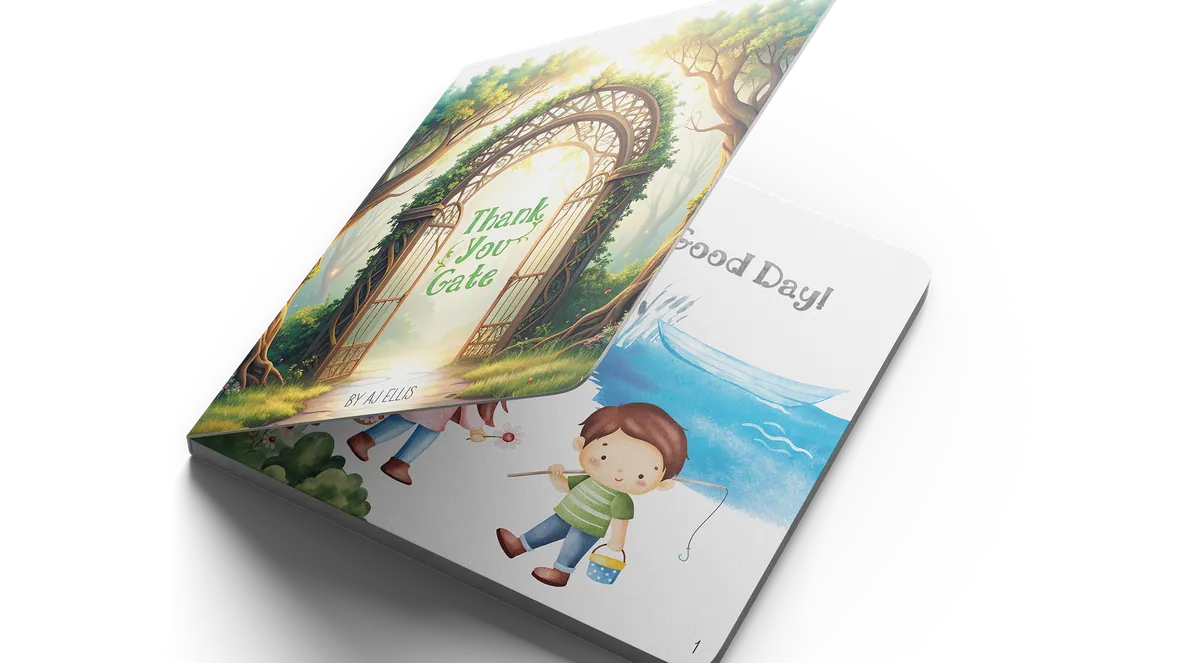
Read the book behind the practice
Thank You Gate by AJ Ellis — every thank you is a little bit of magic.