🌱How to Teach Kids Gratitude (Without the Eye-Rolls)
June 23, 2026
Most parents already know the moment: you prompt a “what do you say?” and get a mumbled, eye-rolling “thaaanks.” Learning how to teach kids gratitude isn’t really about the magic word. It’s about helping a child feel thankful, then giving that feeling somewhere to go.
In Thank You Gate by AJ Ellis, gratitude has a shape children can picture: each thank-you becomes a vine on your own gate — a gentle boundary that lets peace in and keeps the noise out. When kids can see the thing they’re building, the practice stops feeling like a chore. Here’s how to grow it, gently.
Model it before you teach it
Children learn gratitude the way they learn accents — by absorbing yours. Long before a lesson lands, they’re watching how you respond to the world.
So say your own thank-yous out loud, and mean them. “I’m so glad it stopped raining for our walk.” “Thank you for waiting while I finished that call — that really helped me.” Let them overhear you being thankful for small, ordinary things. A child raised around audible gratitude grows up thinking that’s simply how people talk.
Name the feeling, not just the manners
There’s a difference between polite and thankful. Manners are the words; gratitude is the warm feeling underneath. Kids need help connecting the two.
When something good happens, pause and name it: “Notice how nice that felt — Grandma drove all the way here just to see you.” You’re teaching them to catch the feeling in the moment, so the thank-you comes from somewhere real. Over time, the words start arriving on their own.
Make one small daily ritual
Gratitude grows through repetition, not big speeches. Pick one tiny moment and make it a habit:
- At dinner: everyone shares one good thing from the day.
- At bedtime: ask the same gentle question — “What are you glad about today?”
- In the car: play “I spy something I’m thankful for.”
Keep it short and keep it regular. The Greater Good Science Center at UC Berkeley points out that gratitude strengthens the more we practise it on purpose — and a small, steady ritual is purpose made easy. One minute a day, done most days, beats a heartfelt lecture once a month.
Give the feeling a picture: the gate and the vines
Abstract ideas slide right off young minds. A picture sticks.
Tell your child that every real thank-you grows a vine across their very own gate. On grumpy days, the gate can swing shut to keep the grumbles out; on good days, it opens to let the kindness in. Then make it real — let them draw the gate and add a vine each time they notice something to be thankful for. Grunckle, the kind little gatekeeper in the book, tends his gate the very same way.
Our free gratitude printables include a colour-in gate so kids can start growing vines this week.
Let them give, not just receive
Gratitude deepens fastest when it flows outward. A child who only receives thanks stays at the centre of the story; a child who gives it learns to see other people.
Help them write a one-line thank-you note to someone unexpected. Let them hand a drawing to the mail carrier. Have them thank a sibling, out loud, for something specific. The giving completes the loop — they feel the good thing once when they notice it, and again when they pass it on.
Catch them being grateful
We’re quick to correct what kids do wrong and slow to notice what they do right. Flip that for gratitude.
When your child says an unprompted thank-you, or shares without being asked, or notices that someone helped them — name it, warmly and specifically. “I saw you thank your brother for passing the ball. That was really kind of you to notice.” You’re not handing out gold stars; you’re shining a light on the behaviour so it grows. Children repeat what gets gently noticed. A child who hears “I love how you said thank you” will reach for that feeling again, far more readily than one who only ever hears the nagging reminder.
Welcome the hard days too
Here’s the part that’s easy to skip: gratitude isn’t about pretending everything is fine. If you teach kids to slap a “but be grateful!” over every disappointment, they learn to hide what hurts.
Instead, let both be true. “That was a really rough day. And — was there one small good thing tucked inside it?” Sometimes the answer is no, and that’s okay. Real gratitude can sit right beside a hard feeling without cancelling it out. That’s what makes the gate strong rather than brittle.
Keep it light, keep it going
The fastest way to kill a child’s gratitude is to make it feel like homework. Skip the guilt. Drop the “you should be grateful.” Keep your rituals short, your tone warm, and your expectations low. If tonight all you get is a shrug, that’s fine — tend the garden again tomorrow.
You can find more gentle, everyday practices over on the blog whenever you’d like fresh ideas.
Want a simple place to begin? Download the free gratitude printables and help your child grow their first vine tonight. One thank-you, truly felt, is the whole lesson.
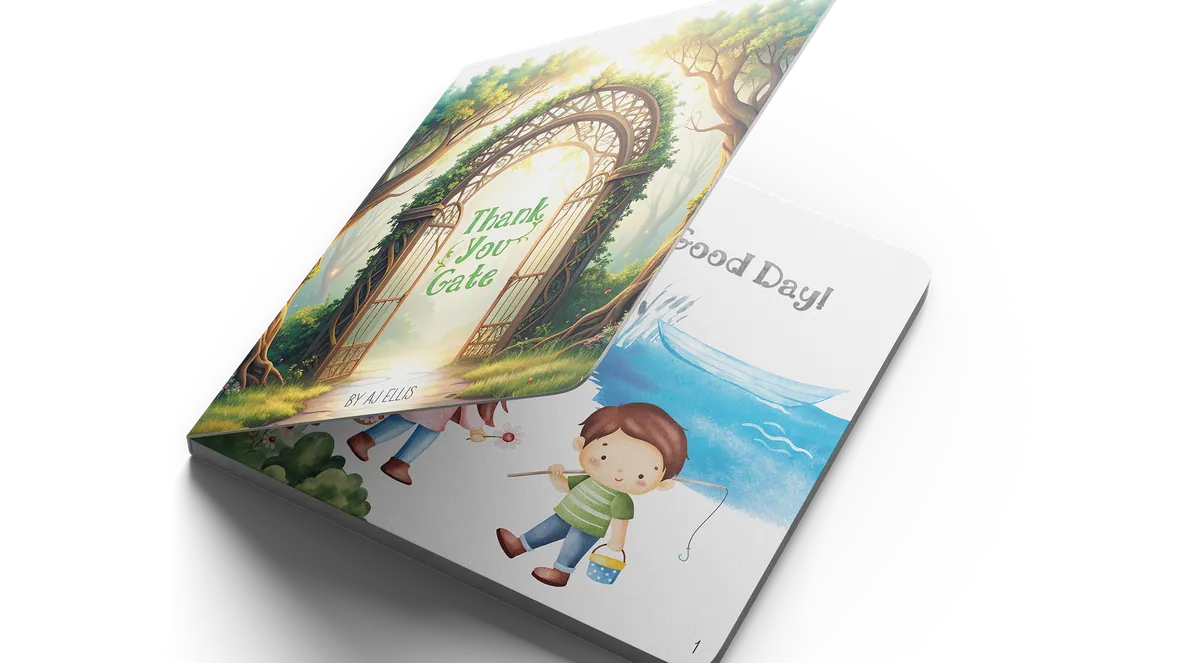
Read the book behind the practice
Thank You Gate by AJ Ellis — every thank you is a little bit of magic.